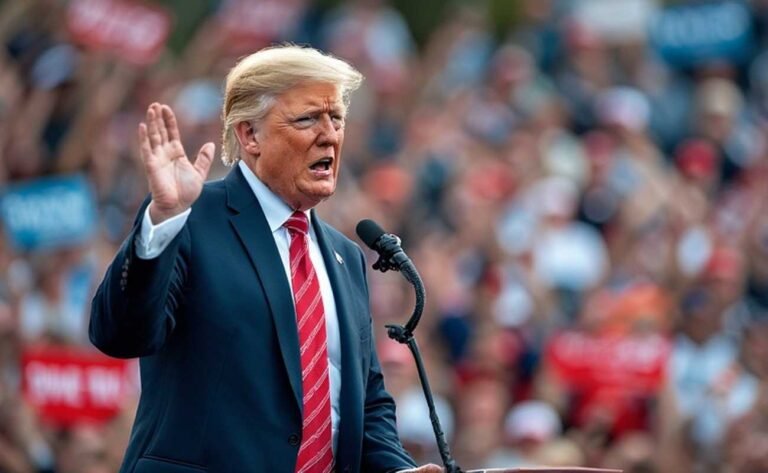

Who Qualifies for $2000 Stimulus Check in February 2026: Complete Eligibility Guide
Short Answer: As of February 7, 2026, there is no approved $2,000 stimulus check being sent by the IRS this month. President Trump has proposed a “Tariff Dividend” of up to $2,000 using tariff revenue, but this requires Congressional approval and faces a pending Supreme Court decision on tariff legality. Most Americans seeing $2,000 deposits in February are actually receiving standard tax refunds, not new stimulus payments. If the Tariff Dividend passes later in 2026, it would likely target middle- and low-income households while excluding high earners.
Now, let’s cut through the noise and explore exactly what’s happening, why February 2026 became ground zero for payment rumors, and what you need to know about potential eligibility requirements if this proposal ever becomes law.
The February 2026 Confusion: Tax Refunds vs. Stimulus Checks
Here’s why your neighbor might be insisting they got a “$2,000 stimulus check” this week—they didn’t. They got their tax refund.
The PATH Act Effect
February is always refund season, but the Protecting Americans from Tax Hikes (PATH) Act creates a specific bottleneck that concentrates payments in mid-February. This law requires the IRS to hold refunds claiming the Earned Income Tax Credit (EITC) or Additional Child Tax Credit (ACTC) until mid-February for fraud prevention.
What this means for you:
- Early filers who submitted in January are seeing refunds arrive now
- Average refunds this year are hovering around $3,000-$3,200 due to inflation adjustments
- Families with children often receive amounts close to that viral “$2,000” figure
- Social media amplifies these normal deposits as “secret stimulus payments”
Real Federal Payments Arriving in February 2026
While there’s no new stimulus, millions are receiving legitimate federal deposits this month:
| Payment Type | Recipient Group | Typical Amount | Payment Schedule |
|---|---|---|---|
| Tax Refunds | Early filers with EITC/ACTC | $2,000-$4,000 | Mid-February 2026 |
| Social Security | Retirees aged 62+ | $1,800-$2,100 | Feb 11, 18, or 25 |
| SSDI | Disabled workers | $1,500-$2,000 | Feb 11, 18, or 25 |
| SSI | Low-income elderly/disabled | $943 individual | Paid Jan 30 (early) |
| Veterans Benefits | Service-connected disabled | $1,000-$3,000 | Feb 1, 2026 |
Key Insight: If you see a deposit around February 15-20, it’s almost certainly your tax refund, not a new government stimulus program.
Current Status of Trump’s $2000 Tariff Dividend Proposal
Let’s talk about the elephant in the room. President Trump has been teasing a “$2,000 dividend” since November 2025, but the details keep shifting.
Timeline of Promises vs. Reality
| Date | Trump’s Statement | Reality Check |
|---|---|---|
| Nov 9, 2025 | “A dividend of at least $2000 a person will be paid to everyone” | Posted on Truth Social; no legislative action |
| Nov 10, 2025 | “Middle income and lower income people of about $2,000” | Excluded “high income people” but no income definition |
| Dec 2025 | “Probably middle of next year” | Timeline pushed back |
| Jan 2025 | “Toward the end of the year” | Further delay to late 2026 |
| Feb 5, 2026 | “I haven’t made the commitment yet, but I may” | Admission that nothing is finalized |
The Supreme Court Roadblock
Here’s the messy part: Trump’s tariffs—which would fund these checks—are facing a Supreme Court challenge. The Court heard arguments in November 2025 about whether the president can impose tariffs under the International Emergency Economic Powers Act.
Possible outcomes:
- If tariffs are struck down: The funding source disappears, and the government might owe billions in refunds to importers
- If tariffs are upheld: Trump could proceed, but still needs Congress to appropriate the money
- Partial ruling: Could limit tariff revenue, reducing potential payment amounts
White House economic adviser Kevin Hassett admitted in December that Congressional approval is likely required, contradicting Trump’s claim that he could act unilaterally.
Who Would Qualify If the Payment Becomes Real
Since no law exists yet, we’re analyzing patterns from previous stimulus programs and Trump’s statements to project realistic eligibility criteria.
Likely Qualification Categories
Based on the American Worker Rebate Act of 2025 (Sen. Josh Hawley’s proposal) and Trump’s “middle income” comments, here’s who would probably qualify:
| Category | Likely Eligibility Status | Reasoning |
|---|---|---|
| Single filers under $75,000 | ✅ Full payment | Matches previous stimulus thresholds |
| Married couples under $150,000 | ✅ Full payment | Standard joint filing threshold |
| Heads of household under $112,500 | ✅ Full payment | Previous program precedent |
| Single filers $75,000-$100,000 | ⚠️ Partial payment | Phase-out range likely |
| Married couples $150,000-$200,000 | ⚠️ Reduced payment | Gradual reduction model |
| High earners above $200,000 | ❌ Excluded | Trump explicitly excluded “high income” |
| Non-resident aliens | ❌ Ineligible | Standard IRS requirement |
| Dependents | ❓ Unclear | Previous checks included dependents; unclear for this proposal |
Special Populations to Consider
Social Security Recipients:
- Would likely qualify automatically based on benefit records
- No tax filing requirement probably needed
- Payment method: Direct deposit to existing SSA accounts
Veterans:
- VA benefit recipients would likely be included
- Similar automatic payment structure as Social Security
Non-Filers:
- People with no taxable income might still qualify if they receive other federal benefits
- Would need to register through IRS non-filer portal (if created)
Mixed-Status Families:
- Previous programs excluded undocumented immigrants
- Citizens married to non-citizens had mixed eligibility
- Unclear if this proposal would follow same rules
Income Thresholds and Phase-Out Scenarios
Let’s get specific about the numbers, because this is where most people get confused.
Projected Income Cutoffs (Based on Historical Data)
If the $2,000 Tariff Dividend follows the pattern of previous Economic Impact Payments, the math would work like this:
| Filing Status | Full Payment Amount | Phase-Out Begins | Payment Reaches $0 |
|---|---|---|---|
| Single | $2,000 | $75,000 AGI | $100,000 AGI |
| Married Filing Jointly | $4,000 ($2,000 each) | $150,000 AGI | $200,000 AGI |
| Head of Household | $2,000 | $112,500 AGI | $150,000 AGI |
How Phase-Out Math Works
For every $100 you earn above the threshold, you lose $5 of the payment. Here’s a concrete example:
Single filer earning $85,000:
- $10,000 over the $75,000 threshold
- $10,000 ÷ $100 = 100 increments
- 100 × $5 = $500 reduction
- Final payment: $1,500
Married couple earning $175,000:
- $25,000 over the $150,000 threshold
- $25,000 ÷ $100 = 250 increments
- 250 × $5 = $1,250 reduction
- Final payment: $2,750 ($1,375 each)
Alternative: The Hawley Proposal
Senator Josh Hawley’s American Worker Rebate Act suggests a different structure:
- $600 per person minimum
- $2,400 for family of four (2 adults + 2 dependents)
- Funded specifically by tariff revenue
- Has not passed Congress as of February 2026
This proposal is more modest than Trump’s $2,000 promise but has the advantage of actually being introduced as legislation.
Documentation Requirements for Potential Eligibility
If this payment ever materializes, you’ll need specific documents ready. Don’t wait until the last minute.
Essential Documents Checklist
| Document | Why You Need It | Where to Get It |
|---|---|---|
| Social Security Card | Proof of valid SSN required | SSA office or replacement online |
| 2024 Tax Return (Form 1040) | Income verification | Your records or IRS transcript |
| Direct Deposit Information | Fastest payment method | Bank routing/account numbers |
| Proof of Residency | Must be U.S. resident | Utility bills, lease agreements |
| Dependent Documentation | If claiming children | Birth certificates, SSNs |
Proactive Steps to Take Now
- File your 2025 taxes early – Even though we’re in 2026, your 2025 return establishes your most recent income data
- Update your IRS account – Log into IRS.gov and verify your direct deposit information
- Check your address – If you’ve moved, file Form 8822 with the IRS
- Create an IRS Online Account – This lets you track any future payments instantly
Payment Distribution Methods and Timelines
If authorized, how would you actually get the money? Based on previous programs, here’s the likely distribution hierarchy:
Speed of Payment Methods
| Method | Speed | Who Gets It |
|---|---|---|
| Direct Deposit | 1-3 weeks | People with bank info on file with IRS |
| Paper Check | 4-8 weeks | Those without direct deposit info |
| EIP Debit Card | 3-6 weeks | Some filers without bank accounts |
| Prepaid Card (Existing) | 1-2 weeks | Social Security/VA recipients |
Realistic Timeline If Approved Today
Assuming Congress passed a bill tomorrow (which they haven’t), here’s how long it would take:
| Phase | Timeline | What Happens |
|---|---|---|
| Legislative Passage | Day 1 | Bill signed into law |
| IRS Programming | 2-4 weeks | IRS updates systems, creates portals |
| First Wave | 5-7 weeks | Direct deposit to existing filers |
| Second Wave | 8-12 weeks | Paper checks mailed |
| Final Wave | 13-16 weeks | Corrections, claims for non-filers |
Translation: Even if approved in February 2026, most people wouldn’t see money until April or May at the earliest.
How to Protect Yourself From Scams
Here’s something that makes me genuinely angry—scammers are already exploiting this confusion. The IRS issued a specific warning in July 2025 about “stimulus check” fraud, and it’s only gotten worse.
Current Scam Tactics
| Scam Type | How It Works | Red Flags |
|---|---|---|
| Text Message Scams | “Click here to claim your $2,000” | IRS never sends unsolicited texts |
| Email Phishing | Fake IRS logos requesting bank info | Misspelled URLs, urgent threats |
| Phone Calls | “Agent” demanding payment to release check | IRS never demands immediate payment |
| Social Media | Viral posts with fake application links | Too-good-to-be-true promises |
| Mail Fraud | Fake checks that bounce after you deposit | Checks from non-government entities |
The Golden Rules
- The IRS never initiates contact via text, email, or social media
- You never pay to receive a federal payment
- Only trust URLs ending in .gov
- When in doubt, call the IRS directly at 1-800-829-1040
If you receive a suspicious message, report it to phishing@irs.gov.
What to Do While Waiting for Official News
Instead of refreshing your bank account every five minutes, focus on what you can control.
Immediate Financial Actions
| Action | Benefit | Timeline |
|---|---|---|
| File your taxes | Claim refunds you’re actually owed | Now through April 15, 2026 |
| Check unclaimed property | Find forgotten funds owed to you | Search your state’s treasury website |
| Review tax credits | EITC could be worth $7,830 | File to claim |
| Adjust withholding | Prevent owing next year | Submit new W-4 to employer |
Reliable Information Sources
Bookmark these official pages rather than relying on social media:
- IRS.gov – Official tax and payment information
- Treasury.gov – Federal payment announcements
- SSA.gov – Social Security payment schedules
- USAspending.gov – Track federal spending proposals
Understanding the Broader Context
The Tariff Dividend proposal exists within a larger economic debate. Some economists argue that sending $2,000 checks while fighting inflation is counterproductive—putting more money into circulation could drive prices higher. Others contend that tariff revenue represents a transfer from importers to the government that should be returned to citizens.
The Congressional Budget Office hasn’t scored the proposal yet because there’s no actual bill to analyze. Estimates suggest the cost could range from $300 billion to over $600 billion, depending on income thresholds and whether dependents are included.
Frequently Asked Questions
Q: Is the IRS sending $2,000 stimulus checks on February 15, 2026?
A: No. The IRS has not announced any such payment. Deposits arriving in mid-February are standard tax refunds for early filers, particularly those claiming the Earned Income Tax Credit or Child Tax Credit.
Q: Did President Trump approve $2,000 checks for February?
A: No. While Trump has proposed a “Tariff Dividend” of up to $2,000, he recently stated this would happen “toward the end of the year” (late 2026), not February. No legislation has been passed.
Q: Who qualifies for the Tariff Dividend if it passes?
A: Based on Trump’s statements, it would target “middle income and lower income people” while excluding high earners. Specific income thresholds haven’t been defined, but previous stimulus programs used $75,000 for individuals and $150,000 for married couples as cutoffs.
Q: Do I need to apply for the $2,000 payment?
A: If a program is created, the IRS would likely use existing tax return data to determine eligibility automatically. You would not need to submit a separate application, but you should ensure your tax information is current.
Q: Will Social Security recipients get the $2,000 check automatically?
A: If the program mirrors previous stimulus payments, yes—Social Security, SSDI, and SSI recipients would likely receive automatic payments using their benefit deposit information.
Q: What if I didn’t file taxes? Would I still qualify?
A: Possibly. Previous programs created a “non-filer” portal for people with no taxable income. However, if you have unfiled returns from previous years, filing them now ensures you’re in the system.
Q: Is the Supreme Court decision going to affect my check?
A: The Supreme Court is ruling on whether Trump’s tariffs are legal. If they strike down the tariffs, the funding source for the proposed checks disappears. This decision is expected soon but hasn’t been announced as of February 7, 2026.
Q: I saw a Facebook post saying checks were approved. Is it real?
A: Almost certainly not. Viral social media posts about “approved” stimulus checks are consistently false. Verify any claim through IRS.gov or official government channels before sharing.
Q: What’s the difference between a stimulus check and a tax refund?
A: A stimulus check (Economic Impact Payment) is a new payment authorized by Congress for economic relief. A tax refund is money you overpaid in taxes being returned to you. February deposits are refunds, not stimulus.
Q: Should I hire someone to help me get the $2,000 payment?
A: No. Anyone charging a fee to “help” you receive a stimulus check is running a scam. Legitimate federal payments require no third-party assistance.
- Learn about other stimulus payments that might be available in 2025 and how they differ from the February 2026 rumors
- Discover Alaska’s Permanent Fund Dividend approach to understand how state-level payments work differently from federal programs
- Check if you qualify for New York’s $400 inflation relief program as an alternative source of support
- Understand IRS refund timelines and tracking methods to monitor your actual tax refund status
- Review the fourth stimulus check discussion to see how previous proposals evolved
For official verification of the information presented here, consult these high-authority government sources:
- The Internal Revenue Service official website provides definitive guidance on tax refunds and any future payment programs
- The Congressional Budget Office offers nonpartisan analysis of federal spending proposals and their economic impact
Final Word
The internet loves a good “free money” story, and the $2,000 stimulus check rumor has all the ingredients—presidential promises, economic anxiety, and perfect timing with tax season. But here’s the truth: as of right now, it’s just a proposal, not a payment. Your best financial move in February 2026 isn’t waiting for a check that might never come—it’s filing your taxes accurately, claiming every credit you deserve, and staying vigilant against scams. If the Tariff Dividend becomes reality, you’ll read about it first on IRS.gov, not Facebook. Stay informed, stay skeptical, and take control of what you can actually affect—your own tax refund.